High-Volume Hiring Automation: How AI Breaks Human Capacity Limits
High-volume hiring pushes human capacity to its limits. Discover how AI helps recruiters reclaim time, consistency, and fairness — without losing the human touch

High-volume hiring automation is no longer optional. Recruiters spend hours scanning CVs, calling candidates, scheduling interviews, and managing spreadsheets. Companies hiring hundreds of employees at once quickly discover that human recruiters can only process so much. Quality drops, candidates drop out, and deadlines slip. By the end of the day, their focus shifts from evaluating talent to just keeping up with the process.
This is where high-volume hiring hits a natural human limit. Attention is finite. Time is fixed. And when hundreds or thousands of applications come in at once, something has to give. Usually, it is quality.
But it does not have to be this way.
The Problem: Human Bottlenecks in High-Volume Hiring
Most hiring teams still rely on manual steps at the very start of the funnel. They read hundreds or thousands of CVs, try to shortlist candidates manually, run phone screens one by one. Each step takes time, and delays add up.
This creates several challenges:
- Speed suffers. Good candidates often drop out before recruiters even reach them.
- Bias creeps in. Under time pressure, decisions become inconsistent and subjective.
- Recruiter burnout. High-volume seasons mean overtime, stress, and mistakes.
When the number of applications doubles, hiring teams cannot just double their time. Companies face a paradox: the more people they need, the harder it becomes to run a fair, structured, and efficient process.
The AI Approach: Automate What Slows You Down
AI-powered hiring automation changes the equation. Instead of asking recruiters to manually screen hundreds of CVs, AI can handle the first pass.
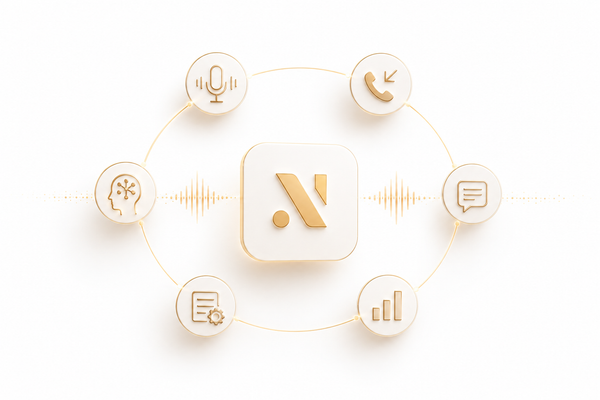
NovaForge’s approach is built around three principles:
- Signal-based screening instead of keyword scanning. Instead of simply matching words in a CV, AI evaluates candidates based on real indicators of skill, experience, and potential.
- Automated phone interviews at scale. Every candidate gets a chance to answer structured questions in their own voice, not just in a written application.
- Instant prioritization. Recruiters see who matches the role best, right away, so they can spend time where it matters most.
This means teams can move from hundreds of hours of manual work to a process that runs in the background while they focus on strategy and relationship-building.
Why This Matters for Candidates
High-volume hiring often feels impersonal for applicants. They send a CV and never hear back. Or worse, they get a rejection without ever having had the chance to show what they can do.
AI helps fix that. By automating the first steps, every candidate gets:
- An equal chance to be heard. No one is filtered out just because their CV formatting was unusual.
- Faster feedback. Automated systems can send updates within hours, not weeks.
- A fairer process. Structured questions mean everyone is evaluated on the same criteria.
When candidates feel respected, they are more likely to engage, even if they are not ultimately selected.
The Results: More Hires, Less Chaos
Companies using AI-driven high-volume hiring report:
- 40–60% faster time-to-hire thanks to automation
- 70% more recruiter time spent on strategic work rather than admin tasks
- Lower candidate drop-off rates because communication is faster and more consistent
In other words, AI removes the ceiling that human capacity creates. It allows companies to grow fast without sacrificing quality or burning out their teams.
Where to Go Next
If you are exploring high-volume hiring solutions, start by mapping where most of your time goes today. Then imagine what would change if those hours were given back to your team.