What's New in Nova: Q1 2026 Update
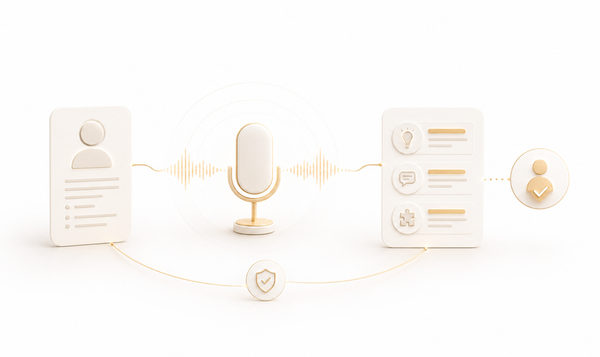
Q1 2026 was Nova's first public release quarter. Turkish TTS shipped, incoming call handling went live, and the building blocks for enterprise voice workflows — FAQ-driven responses, customizable call templates, configurable analytics — are now in production.

A look at what we built, what we shipped, and what it means for enterprise deployments.
Q1 2026 was our first public release quarter. Not a preview, not a limited pilot — production-ready capabilities that enterprise teams can deploy today.
Here is what shipped, and why each piece matters.
Turkish TTS — Early Release
Nova's proprietary Turkish TTS model is now available for enterprise deployment.
This is the capability everything else is built on. A voice model trained natively on Turkish that performs in the environments real enterprise calls actually happen in. Telephony infrastructure. Variable network conditions. Extended conversation length. Formal and informal register.
The early release reflects our confidence in its production readiness. We've been building and testing this in real environments, and the output meets the standard we set from the beginning: a voice that doesn't draw attention to itself.
More on what makes the model distinct in our earlier piece on [why Turkish TTS is still an unsolved problem].
Incoming Call Handling
Nova now supports incoming calls — not just outbound.
This means enterprises can deploy Nova as the first point of contact for inbound customer inquiries: handling volume, routing intelligently, and answering questions without a human agent in the loop for every interaction.
The same infrastructure that powers outbound survey and outreach workflows now works in reverse. One platform, both directions.
FAQ-Based AI Responses
Nova's answer logic is now driven by a structured FAQ layer that each institution defines and controls.
How it works: the company provides the questions and the approved answers. Nova learns from that structure and handles caller questions from within it. When a caller asks something covered by the FAQ, Nova answers — accurately, consistently, and in the company's voice.
When a caller asks something outside the FAQ, Nova doesn't improvise. It tells the caller their question has been noted and that someone will follow up. A notification is created for the relevant human. The loop closes.
This design keeps the institution in control of what gets said on its behalf. It prevents hallucinated answers in high-stakes environments. And it creates a feedback loop — every out-of-scope question is data that helps the FAQ improve over time.
Customizable Call Templates
Every call type in Nova now runs from a configurable template.
Enterprise use cases are not uniform. A customer satisfaction survey after a banking transaction has different requirements than an appointment reminder for a healthcare provider, or a first-touch outreach call for a sales team. The tone, structure, question set, escalation logic, and closing behavior all vary.
Call templates give operations and product teams the ability to design and modify these flows without engineering support. The conversation is owned by the people closest to the use case — not locked in a development queue.
Customizable Analytics
Post-call analysis in Nova is now fully configurable.
Institutions can define which metrics matter for their specific deployment — escalation rate, sentiment signals, response patterns, topic frequency — and surface them in a dashboard built around their reporting needs rather than our defaults.
The goal is simple: the data Nova generates should be immediately useful to the teams making decisions from it. Not raw output that requires a data engineer to interpret. Insight that operations and strategy teams can act on directly.
More on all of that in the Q2 preview.
Questions about early access or deployment specifics? Reach out to contact@novaforge.tech or visit novaforge.tech.