The New Language of Talent: How AI Decodes What We Really Say in Interviews
AI is redefining how we understand people. Discover how signal-based hiring decodes tone, empathy, and potential — creating a fairer, more human hiring experience.

AI talent evaluation is changing how companies understand people. In today’s hiring world, recruiters are no longer limited to what’s written on a CV. With signal-based hiring and AI interview analysis, it’s now possible to see beyond resumes and detect what truly matters: potential, communication style, and emotional intelligence.
Imagine sitting down for a phone interview. You speak naturally, pausing, emphasizing, adjusting your tone as you think through your answers. Now imagine that on the other end, an AI system isn’t just transcribing your words, it’s listening to how you speak. It’s noticing the rhythm in your sentences, the confidence in your tone, the empathy in your phrasing. This isn’t science fiction anymore. This is what we mean by the new language of talent.
We’ve entered an era where communication signals are becoming as important as content. Traditional resumes and text-based assessments reduce people to bullet points. But human potential doesn’t live in bullet points. It lives in the way we express ourselves, in the micro-patterns of how we think, decide, and connect. AI, when built responsibly, can help decode that invisible layer.
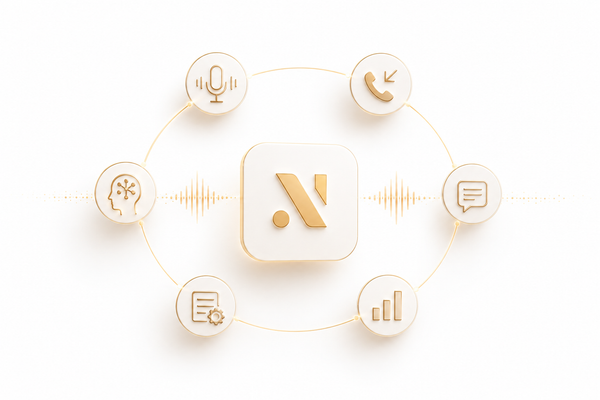
Signal-based evaluation looks beyond what’s said to uncover how it’s said. In phone or voice interviews, AI analyzes aspects like tone variation, pacing, sentiment, and speech clarity. These signals, when interpreted within ethical frameworks, can reveal valuable soft skills such as adaptability, empathy, and confidence that are hard to measure otherwise. For instance, two candidates might give similar verbal answers, but their delivery can show drastically different communication styles.
A common concern with AI talent evaluation is bias. The truth is, any tool is only as fair as its design. A well-designed system, like the ones we’re developing at NovaForge, learns to detect universal indicators of engagement and authenticity, not superficial traits. It doesn’t compare you to a single “ideal” voice, it learns from diverse data to understand that talent speaks in many accents, tones, and cadences.
What’s most powerful about this approach is that it democratizes hiring. Not everyone has a perfectly polished CV. Not everyone went to a top university or had access to traditional career pathways. But everyone can express their ideas. By focusing on signals rather than surface data, AI can highlight candidates whose potential might otherwise go unnoticed. That self-taught developer who sounds curious and analytical, or that customer support candidate who communicates calm under pressure… AI can help hiring teams recognize them faster and more fairly.
This is especially powerful in high-volume hiring, where thousands of candidates apply for limited roles. Instead of relying on keyword filters or rushed resume scans, recruiters can use signal-based insights to prioritize genuine potential. Every applicant gets the chance to be heard.
Signal-based AI also makes high-volume hiring more humane. Recruiters know the exhaustion of screening hundreds of applications that all look similar. Automated voice assessments can pre-screen candidates without cutting them out of the conversation. Each person still gets the opportunity to be heard, literally. The AI summarizes patterns, not personalities, leaving final decisions to humans who now have richer, more meaningful insights.
When AI listens, it must also protect. Ethical data use is essential for trust. Candidates should always know what’s being analyzed, how it’s used, and how it benefits them. Transparent AI hiring systems empower both sides: candidates get fairer evaluations, and employers make data-backed, unbiased choices. Therefore, when done right, AI doesn’t replace human judgment, it refines it. It removes noise and bias so humans can focus on what really matters: connecting with people.
We often talk about the “future of work” as if it’s far away. But it’s already here, reshaping how we define talent and potential. The next big shift won’t come from more data, it will come from understanding people more deeply through data. Voice and signal analysis are steps toward a more empathetic hiring world, where technology amplifies our ability to listen rather than filter.
At NovaForge, we believe the hiring process should feel less like an interrogation and more like a conversation. AI isn’t here to decide who you are, it’s here to help your voice be heard and understood.